About MS CEW TUBE 30mm OD X 2mm/2.5mm/3mm/4mm/5mm Thickness
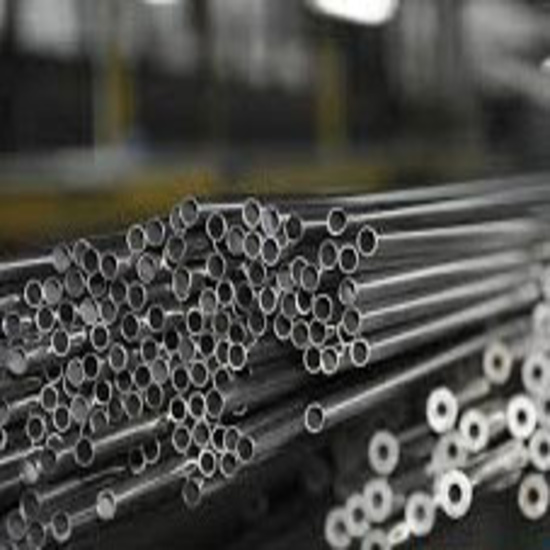
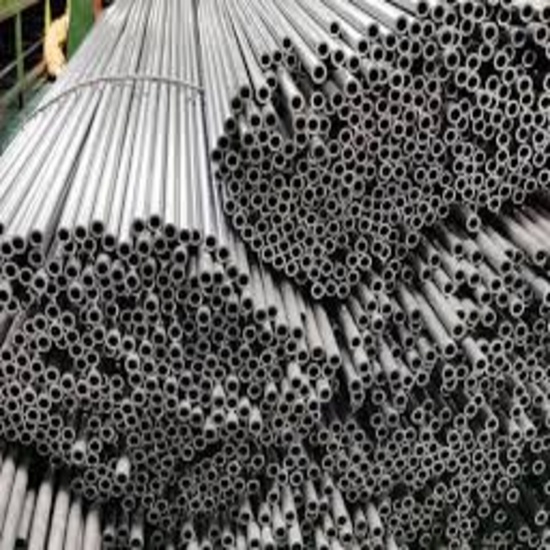
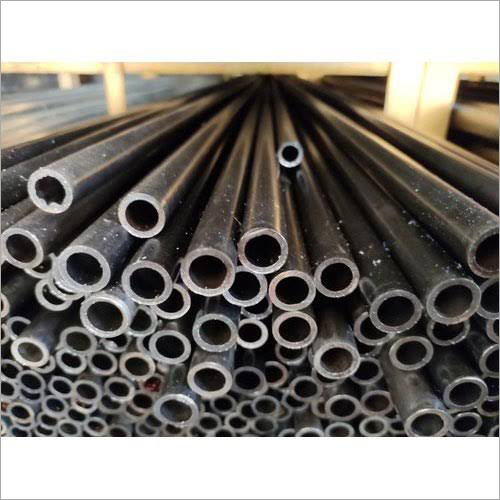
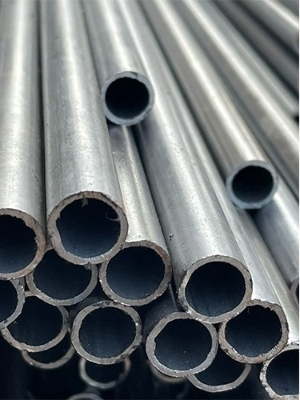
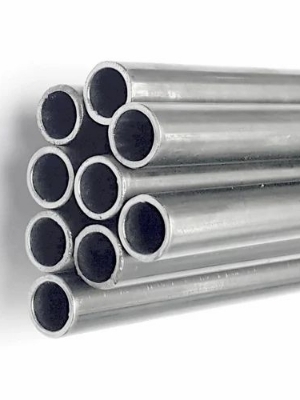
*Cold Extended Welded (CEW) tubes, also known as CDW (Cold Drawn Welded), are high-precision steel tubes manufactured through a meticulous cold-drawing process. Starting as electric resistance welded (ERW) tubes, they are pulled through a die and over a mandrel at room temperature. This process significantly enhances the tubea s mechanical properties, resulting in superior dimensional accuracy, a high-quality surface finish, and increased tensile strength. Because the drawing process eliminates the internal weld bead, CEW tubes offer exceptional concentricity and uniformity. They are the preferred choice for demanding industrial applications such as hydraulic cylinders, shock absorbers, automotive axles, and precision engineering components where tight tolerances and durability are non-negotiable.
Key Characteristics
- Manufacturing Process: Starts as a standard ERW tube, then cold-drawn at room temperature to achieve exact wall thicknesses and diameters.
- Superior Weld Strength: Cold drawing improves the weld seam, allowing it to reach >95% of the parent material's strength.
- Precision: Offers high dimensional accuracy and exceptional surface finish, often reducing the need for costly secondary machining.
- Typical Specifications
- Standards: Commonly manufactured to specifications like IS 3074 (specifically grades CEW 1 through CEW 5 for automotive purposes).
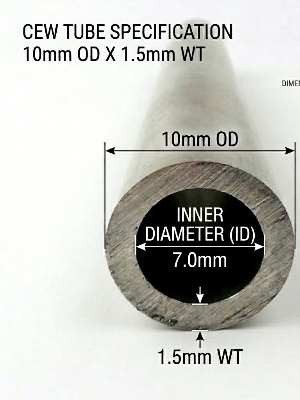
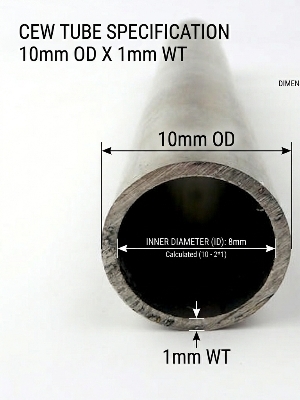
- Size Range: Outer diameters generally range from 6 mm to 114.3 mm, with wall thicknesses varying between 0.5 mm and 20 mm.
- Length: Standard lengths are usually 6 meters, or custom-cut to specification.
- Automotive: Used for shock absorbers, steering columns, exhaust systems, and structural components.
- Industrial & Machinery: Hydraulic equipment, material handling devices, and precision machined parts.
Precision Engineering for Varied ApplicationsThese MS CEW Tubes are engineered through a cold drawn process, ensuring consistent roundness and exceptional structural integrity. Suitable for industries such as automotive, construction, fabrication, and mechanical engineering, the tubes can be relied upon for applications requiring precise dimensions, smooth surfaces, and enhanced mechanical properties. Their robust quality and flexibility in thickness cater to a multitude of project requirements.
Superior Protection and Surface FinishEach tube undergoes annealing, which relieves internal stresses and improves ductility, making them easier to work with. The oiled surface treatment provides a protective layer that prevents oxidation during storage and transport, preserving the quality of the mild steel. This combination of finishing and treatment assures users of lasting durability and aesthetic appeal.
FAQ's of MS CEW TUBE 30mm OD X 2mm/2.5mm/3mm/4mm/5mm Thickness:
Q: How are MS CEW Tubes with a 30mm OD manufactured?
A: These tubes are produced using the cold drawn electric welded (CEW) method, followed by annealing. The process ensures a smooth internal and external surface, as well as consistent dimensional accuracy, making them suitable for precision applications.
Q: What benefits does the oiled surface treatment provide for these tubes?
A: The oiled surface treatment acts as a protective layer, guarding the mild steel against corrosion, oxidation, and atmospheric exposure during storage and transportation, thereby maintaining product integrity until use.
Q: When should I choose different thicknesses (2mm, 2.5mm, 3mm, 4mm, 5mm) for my application?
A: The selection of tube thickness depends on the load-bearing, pressure, or structural requirements of your project. Heavier-duty and higher-pressure applications generally require thicker tubes, while lighter uses can benefit from thinner sections for weight reduction.
Q: Where are these MS CEW Tubes commonly used?
A: These tubes find applications in the automotive sector, construction, fabrication industries, furniture manufacturing, and mechanical engineering, thanks to their balance of strength and workability.
Q: What is the advantage of having a tolerance of +/-0.2mm?
A: The strict tolerance ensures each tube has minimal dimensional variation, which is crucial for projects requiring precise assembly, easy fitting, and consistent performance in automated or manual settings.
Q: How does annealing improve the quality of these steel tubes?
A: Annealing relieves internal stresses and improves ductility in the steel tubes, making them less likely to crack or become brittle during fabrication or use. This results in easier machining and longer service life.
 Send Inquiry



 Send Inquiry

 Send Inquiry